
From F2F to Online: An Instructor’s Guide to Teaching Science Labs Online
Key Takeaways: An Instructor’s Guide to Teaching Science Labs Online
- Online science labs can maintain rigor and student engagement with the right mix of hands-on kits, virtual simulations, and accessible course design.
Instructors can replicate core lab skills and inquiry-based learning online using structured, ADA-compliant content, scaffolded activities, and multimodal delivery. - Course consistency across face-to-face, hybrid, and online sections is essential for quality and student confidence.
Shared templates, aligned objectives, and integrated resources reduce confusion, strengthen outcomes, and lighten instructor workload. - Hands-on lab kits paired with virtual simulations create the strongest learning outcomes for online students.
This dual-modality approach deepens conceptual understanding, builds physical lab skills, and increases retention in online science courses. - Clear connections between lecture and lab dramatically improve comprehension and performance.
Aligning learning outcomes, scheduling labs with related topics, and using pre-lab activities help students see the “why” behind every experiment. - High-touch communication and structured support directly influence student success online.
Flexible office hours, timely feedback, announcements, walk-through videos, and pre-lab practice reduce anxiety and keep students on track. - Technology choices matter, especially LMS integration and accessibility.
A lab management platform that integrates with the LMS, automates grading, and supports WCAG 2.1 AA accessibility helps instructors save time and meet compliance. - Continuous improvement through analytics and student feedback strengthens course quality each term.
Tracking engagement, updating assessments, and adjusting lab activities ensures online courses stay effective and instructor workload stays manageable. - Faculty don’t need to reinvent the wheel.
Leaning on pre-built curriculum, proven hands-on labs, and virtual simulations accelerates development and ensures rigor from day one.
How to Offer Online Science Labs
The consensus is clear. To stay competitive, steadily increase enrollment, and expand access to important STEM disciplines, programs need to get serious about transitioning and offering more lab courses online. But how serious?
Of nearly 2,000 students surveyed, an overwhelming majority said it was important and necessary for them to take the course online, while 30% said they would enroll elsewhere if their lab wasn’t offered online, underscoring how flexibility now drives enrollment decisions.
You might be asking: How do I adapt science experiments for remote or blended learning? Transitioning your existing face-to-face lab courses online isn’t easy. Unlike other disciplines, yours relies on inquiry-based, hands-on learning to reinforce concepts and instill the skills students need. That’s tricky in an online setting, raising valid concerns for both administrators and instructors around resources and support, as well as the quality and rigor of the experience.
From building out your course lectures and creating a quality lab experience to ensuring clear communication, ample support, and hoping your students come away with an enriching experience, constraints on your time and resources make it challenging. But with the right resources and partner, you can streamline the transition and ensure you’re delivering a consistent and rigorous experience across any modality whether online or on campus.
In this guide, we focus on the areas that matter most when it comes to teaching an effective, authentic online course and lab that leads to greater student success.
How to Teach Science Labs Online: Build a Strong Foundation
One of the most important steps in preparing to teach online science courses and labs is creating a solid online course foundation. This will provide a structured, engaging learning environment for students, ensuring they can easily navigate the course material, understand learning objectives, and achieve desired outcomes—ultimately leading to a positive learning experience.
Added bonus!
It helps you provide consistency across course formats to ensure you deliver a consistently high-quality lab no matter the format.
6 Essential Elements for Building a Solid Online Science Course
- Set your vision: Identify your course objectives and learning outcomes. Your course objectives are a roadmap for students to develop the right skills, whether it's building foundational knowledge for more advanced coursework or degrees, or the practical knowledge to take on certifications and enter the workforce. And remember, just because you’re delivering your lab course online doesn’t mean curriculum or objectives should be different from on-campus courses.
- Compare on-campus offerings: Evaluate existing on-campus materials and how they can translate to an online environment. For example, review existing learning objectives, lab activities, and multimedia resources, while adapting or replacing elements to ensure accessibility, scalability, and student engagement in a virtual environment.
- Ensure Course Consistency: Creating a consistent, high-quality experience across formats, whether online or in-person matters. Use high-quality online curriculum that allows students to gain the knowledge and skills needed to achieve course competencies. Consider using templates for all of your sections that include consistent branding and are ADA compliant. What’s more, all of your core content should be similar and shared to all sections.Add to and personalize as needed but be sure to include vocabulary lists, interactive videos, worksheets, quizzes, and labeling activities so you’re setting students up for success.
- Do a tech check: Assess how your learning management system (LMS) aligns with your needs and if any changes need to be made to accommodate this new format, including ensuring your lab management platform integrates with your LMS for easier access and grading.
- Invest time in student resources: Build a supportive learning environment by fostering a space where students can ask questions and feel guided throughout the course. Include videos, walk-through demonstrations, tutorials, vocabulary lists, and guidance on how best to contact you (email, phone, chat, virtual & live office hours, etc.).
- Effectively market the class: Create a detailed, transparent course catalog description that outlines what students will do, how labs will be conducted, and what they’ll achieve by the end of the course. Connect with your program head and marketing team to help in promotional efforts to attract and enroll more students.
Key aspects of a strong online course
Clear Learning Objectives
Well-defined goals and outcomes for each lesson, lab, and the entire course, allowing students to understand what they should be able to do by the end.
Logical Course Structure
A coherent organization of content, with lectures and labs progressing in a logical sequence, making it easy for students to follow the learning path.
Engaging Content Delivery
A variety of media formats like videos, text, audio, and interactive learning elements like hands-on labs and virtual simulations to cater to different learning styles and keep students actively engaged.
Meaningful Assessments
Relevant assessments that accurately gauge student learning progress and provide feedback to guide improvement, such as lab reports to assess data analysis skills and quizzes to test concept retention and understanding.
Accessible Design
Considering accessibility of your digital and hands-on content and be sure to use fully accessible technology and media with appropriate text sizes, color contrasts, and alternative formats for content.
Community Building
Opportunities for student interaction through discussion forums, collaborative projects, partnering, and video sessions to foster a sense of connection and support.
Benefits of a strong online course foundation
Improved Student Retention
Clear structure and engaging content encourage students to stay committed to the course and complete it successfully.
Enhanced Learning Outcomes
Students are more likely to achieve the intended learning objectives when the course is well-designed and structured.
Positive Student Feedback
A well-built course leads to positive reviews and recommendations, attracting more potential students.
Efficient & Consistent Course Development
A solid foundation allows for easier updates and future iterations of the course.
Scalability
A well-structured online course can be easily altered for different formats (hybrid, blended) without compromising quality.
“Whether known or not, nearly 1 in 5 college students may have a disability that affects accessibility. My goal is to design courses that anticipate the diversity of students that may enroll in it. And to do this, we often look at universal design principles to enhance the usability, taking into account disability, number of students, and the mix of majors and non-majors so that we can always be improving the access and experience for students.”
– Dr. Amanda Rosenzweig, Delgado Community College
Adapt the Lab: Use At-Home Hands-on Labs with Virtual Simulations
Finding ways to adapt your on-campus learning activities for an online environment will help strengthen your course foundation. This means maintaining a hands-on lab experience, and supplementing that work with virtual simulations. Among other benefits, this approach has proven to spark your online students' curiosity, inspire greater interest in the topic you’re teaching, and engage them more deeply by reinforcing lecture content—moreso than relying solely on virtual simulations.
When to Choose Virtual Labs vs Hands-on Labs
There are some important steps to think through when deciding your modality. Keep in mind what students will gain from the lab, how students will complete the lab successfully, and what technology tools might be useful in implementing either virtual or hands-on labs.
Use a hands-on-lab when you want to:
- Increase inclusivity by activating all the different styles of learning.
- Engage students in a more authentic lab experience, helping them better master course concepts.
- Elevate the quality of the online learning experience by helping students learn the physical & critical thinking skills necessary to run an experiment.
“Science Interactive kits provide high-quality materials that align well with course objectives and module level objectives, ensuring students can achieve practical understanding of the content discussed in lectures.”
– Dr. Effat Zeidan Hatoum, California Baptist University
Use a virtual lab if:
- The size, cost, and safety concerns associated with certain equipment or materials are too high.
- The physical, ethical or religious concerns might exclude some students from being able to perform the experiment. Keep labs as accessible as possible by offering a virtual simulation as an alternative for all hands-on labs.
- You want to expose students to a topic/concept that does not directly align to your course objectives or provide a low-stakes way for students to practice and reinforce learning, consider a virtual simulation.
For more support, check out the guide:
“The hands-on components were great! The instructions were step-by-step and I felt like I was gaining a lot of experience and knowledge regarding the subject. All of the labs were very good at explaining our hands-on tasks, and even the rat dissection was an amazing experience to learn so much from.”
– Online biology student, Delgado Community College
Here's a quick rundown of how to approach it:
- Find the right mix: Using a strategic mix of hands-on labs paired with virtual simulations will help you better engage students and reinforce learning.
- Prepare students: Include kit instructions, lab timelines, and transition details in the syllabus.
- Coordinate hands-on kit access: Hands-on lab kits help replicate the hands-on learning that occurs in campus labs. Either have kits shipped directly to students or work with your campus bookstore to ensure financial aid can be used. Explore inclusive access models—like incorporating costs into course fees—to streamline the purchase of hands-on lab kits, ensuring affordability and easy availability for all students. Check out this guide for more on at-home lab kits.
- Start off strong with virtual: This might be some students’ first online course, let alone lab course. Begin with virtual lab simulations during the first couple weeks to give students time to acclimate both to learning online, and so you can cover core concepts and review lab safety before students dive into hands-on learning.
- Combine modalities: Start incorporating hands-on labs and pair them with virtual simulations. Use virtual labs for complex concepts and hands-on kits for skill and inquiry-based learning. Build engagement by encouraging students to share progress with photos or videos.
- Offer lab support: Set up virtual office hours for lab-specific questions and consider open lab hours for in-person support when possible (more on this later!). Be sure each hands-on lab has a walk-through video or images.
- Prepare students: Include kit instructions, lab timelines, and transition details in the syllabus. Build engagement by encouraging students to share progress with photos or videos.
Not sure when to use a virtual lab or a hands-on one? Use the following guidelines to identify when to use which modality:
Integrate Lecture & Lab Content
Lab and lecture. Lecture and lab. You can’t have one without the other … that is, if you want a truly effective learning experience for students. But more often than not, what’s missing is the connection.
While it might seem obvious, students often struggle with connecting key concepts from lecture to what they’re doing in a lab—whether virtual or hands-on. That’s why it’s important to directly connect the concepts of digital lessons and lectures to labs; otherwise, they’ll just be going through the motions without processing and engaging with course material.
3 Steps for Connecting Lecture to Labs
Align learning outcomes
Reflect on the learning objectives for your course and identify how a lab supports those objectives and lecture topics.
Questions you might ask include:
- Why are students completing this lab activity?
- What do you hope students will gain from this activity?
- What should students understand or know how to do once they’ve completed the activity?
Identify the labs, whether virtual or hands-on, that align with your outcomes.Pair content intentionally
Schedule labs to coincide with related lecture topics. For example, plan a titration virtual lab during the week you cover chemical reactions in the lecture. Determine if a virtual lab or hands-on lab is best.
Create pre-lab connections
Include pre-lab assignments that require students to review lecture material or apply concepts they’ve learned, helping them see the direct relationship come lab time. Pre-labs that include trial virtual experiments give you the best of both worlds—pairing a virtual simulation with a hands-on lab aligned to lecture content will help students better connect with the material. It gives them an opportunity to repeat experiments in a low-stakes environment, move at their own pace, and more deeply engage with course material before moving forward on a hands-on experiment.
See it in Action
Dr. Hiranuma, Environmental Science instructor at WTAMU, delivers authentic environmental science, atmospheric and earth chemistry courses online and takes care to align lecture materials with each lab. To replicate a seated lab class as closely as possible, Dr. Hiranuma selected hands-on experiments and lessons and purposefully aligned the labs with his lecture topics to ensure students could connect lecture concepts to real-world application.
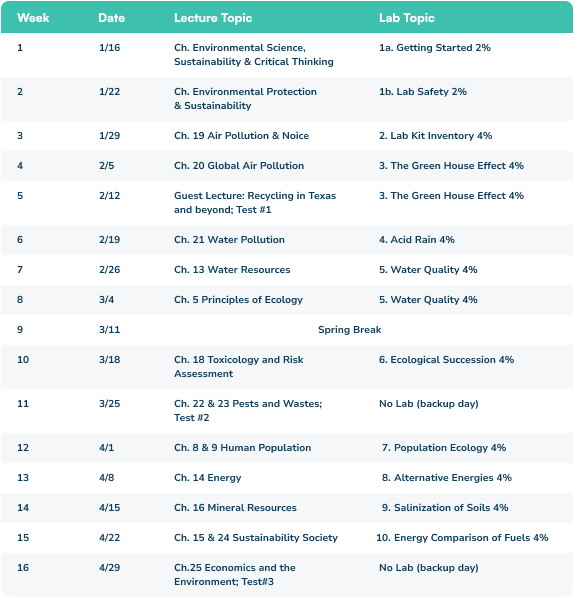
Dr. Hiranuma also couples hands-on labs with virtual lab simulations. He does this to maintain course affordability and to reinforce the hands-on learning and his lecture topics. Get more of Dr. Hiranuma’s best practices for delivering authentic online labs here.
Engage Students Online
Just like teaching, learning online is different—a skill to be practiced and only effective when a student fully engages, which is why it’s so important to use proven strategies for engaging students online.
8 Proven Strategies for Increasing Engagement Online
- Use online class and small-group discussion forums to ask questions and encourage students to share thoughts and perspectives.
- Enable community by assigning virtual lab partners.
- Use written assignments to support the reflection process.
- Assign research projects to help build critical thinking skills.
- Employ a variety of multimedia, including video, to deliver content.
- Incorporate kinesthetic activities and hands-on labs at home to activate different styles of learning and enhance retention.
- Reduce anxiety by setting clear expectations by making sure a syllabus and rubric tied to the course’s learning outcomes are highly visible, communicating how students will be assessed, and letting them know in advance how to order their hands-on kits.
- Increase the accessibility of materials and activities using technology that’s fully accessible, as well as transcripts, alt text, screen reader compatibility, flexible deadlines, and multiple formats to support diverse student needs.
ProTip!
Use Supplemental Resources to Engage Students & Reinforce Learning
- KWL Models where students write down what they Know about a topic, what they Want to know, and then later fill in what they Learned, allowing them to actively engage with the material and track their learning progress throughout a lesson or unit.
- Mental or Mind Maps as a visual representation so students understand how people visualize the world differently, and how their knowledge of a place comes from a variety of sources.
- YouTube videos and articles
- Handouts with diagrams to illustrate visual topics like the periodic table
- Hands-on labs coupled with virtual simulations to reinforce concepts, theory and practice
- Final research projects so students can apply critical thinking skills
As with any subject, the key is to make personal and cultural connections so students have a strong frame of reference and clearer understanding. Use your teaching resources to draw connections to everyday activities where science is clearly taking place, such as when doing laundry, showering and bathing, using toothpaste or makeup, and food preparation.
Support Students from a Distance
Tibi Martin, chemistry instructor at San Joaquin Valley College and Blended Learning Innovator of the Year, says it best:
“Everyone learns differently and at a different pace, which is why I work to modify my courses and support students as needed. I want to reach everyone. I go in different directions for them to learn and empower them to look beyond the classroom with science articles, videos, and their own life experiences. And when you see a student’s face as they engage in a different level of learning, you, as a teacher, know you’re doing a good job!”
– Tibi Martin, Chemistry Instructor at San Joaquin Valley College
Without direct access to instructors in real time, you should prioritize student resources and support to ensure students don’t struggle in silence, fall behind, or miss critical course milestones. When we surveyed online instructors, they said they use the following methods to support students:
- Office hours
- Closely monitoring students
- Using discussion boards so students can interact
- Providing additional material and pre-recorded videos
- Using virtual simulations and hands-on labs
When we asked online students what supplemental resources would best support them, they said:
- Virtual simulations (86%)
- Virtual simulations as a practice lab (84%)
- Asynchronous videos (82%)
- Peer collaboration (55%)
“We cater to the non-traditional student…those who work different hours and juggle family responsibilities. That’s why I lean into flexibility and teaching mostly asynchronously, allowing students to submit their work at the end of the week. We also meet weekly for our lab courses using Science Interactive kits, which gives my students that hands-on kinetic experience they need even if they can’t be in the classroom.”
– Professor Telicia Ward-Thomas, Pharmacy, American National University
Are Your Online Students Fully Supported?
To support the flexibility of your online students, you’ll have to be the most flexible of all! Use this checklist of tactics to empower your students to do their best work.
- Offer flexible office hours: Set up virtual office hours using video conferencing tools to provide one-on-one or group support. Pair this with in-office hours if possible. Take flexibility a step further and offer office hours by appointment over Zoom rather than arbitrarily selecting a time. This helps students who are juggling multiple obligations.
- Be extra: Explore hybrid lab options like in-person open lab hours for students who need extra support.
- Stay connected: Use multi-touch point communications tools like email, LMS announcements, and discussion boards to stay connected with students and address questions.
- Enable overall course flexibility and work with students who have unique situations that might alter their abilities to continue in the course.
- Provide detailed course policies to ensure expectations are clear. Make sure the syllabus remains highly visible and that students know when and where to find all materials.
- Promote good study habits and make students aware of academic and mental health resources, while providing curriculum resources, memory aids, and mnemonics.
- Make recordings of all lectures and reviews available in a timely fashion. Make sure all hands-on lessons have step-by-step instructions or walk throughs, checklists, and timelines so students feel confident before starting a lab.
ProTip!
Meet students where they are, and not where we want them to be.
Dr. Amanda Rosenzweig from Delgado Community College reminds us that students take labs online for a variety of reasons, including having to balance studies with medical challenges, employment, military deployments, child rearing and transportation issues.
“Even if a student requires more attention or resources or perhaps online learning isn’t the best format for them, it’s imperative to provide them with a positive, effective learning experience that supports engaging, hands-on practices.”
– Dr. Amanda Rosenzweig from Delgado Community College
Reduce Time & Resource Constraints
You’ve heard it before … do more with less! In this section, we’re going to share some time-saving resources so you can do just that. The goal here is to eliminate as much manual work as possible so you can spend your time focusing on what really matters: teaching.
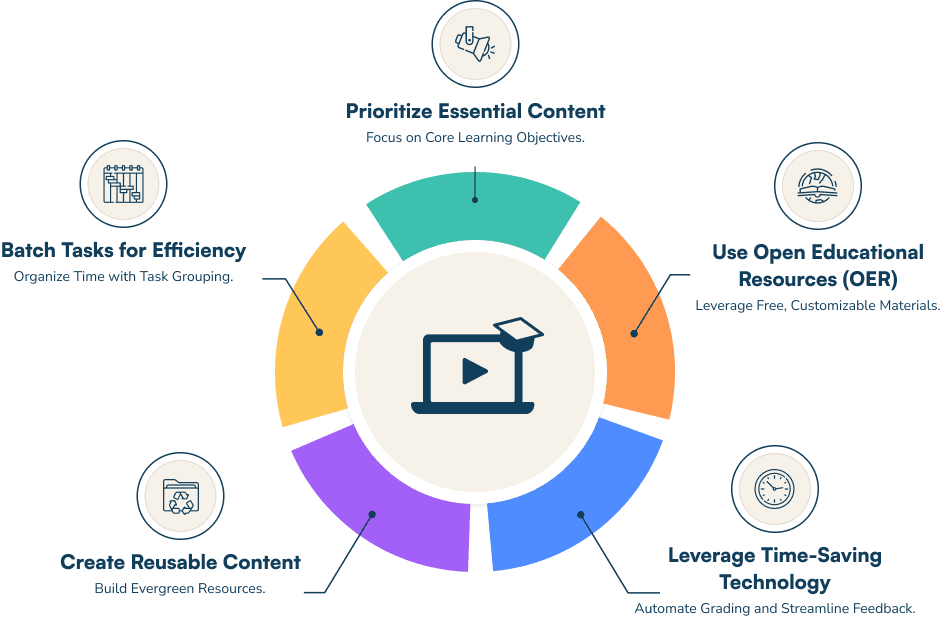
Here are 5 practical tips to streamline your transition to online teaching.
- Prioritize Essential Content
- Focus on the core topics and learning objectives that students need to achieve. Avoid overloading courses with secondary materials.
- Develop a "must-have" and "nice-to-have" list for course content to streamline what you need to create or adapt for online delivery.
- Use concise modules, recorded lectures, or curated readings to quickly get essential content online.
- Use Open Educational Resources (OER)
- Explore OER repositories like OER Commons or OpenStax for free, high-quality textbooks, multimedia, and lesson plans that integrate with your lab management platform. Ensuring content is accessible during labs will also help students during labs and reduce the amount of questions you’ll have to field.
- Add materials to align with your specific course goals, saving time on developing resources from scratch.
- Share links to OER content directly in your learning management system (LMS) to give students easy access.
- Leverage Time-Saving Technology for Grading and Assessment
Make sure you use a lab management platform to deliver content and assess student work. The key here is making sure your tech tools work together so you can take advantage of lab management features designed to save you time:
- Seamless integration: Ensure easier grading and course administration and quicker access for students with a seamless LMS integration
- Automatic grading: Multiple-choice assessments are graded automatically, giving you more time to teach and provide constructive feedback to student
- Assessment analytics: Identify students who may be falling behind in certain areas, giving you the opportunity to provide extra guidance to get back on track
- Create Reusable Content
- Record videos or tutorials that can be reused across multiple semesters.
Build a digital "resource bank" of lecture slides, readings, and activities that you can update rather than recreate. - Use discussion boards or forums to facilitate peer-to-peer learning and reduce the burden of answering repetitive questions.
- Automate routine communications with students using announcements and email templates for common queries.
- Record videos or tutorials that can be reused across multiple semesters.
- Batch Tasks for Efficiency
- Dedicate specific times for grading, responding to student emails, and preparing materials to minimize task-switching.
- Group similar tasks (e.g., grading one assignment type at a time) to work more efficiently.
- Use scheduling tools to post announcements or assignments in advance, reducing daily administrative work.
- Don't Reinvent the Wheel
- No need to start from scratch if you don’t want to. Choose the right partner and use resources at your disposal. Example: Science Interactive has hundreds of hands-on and virtual labs across 14 Quality Matters-certified disciplines, pre-built assessments, lab management and more that you can use.
Smart Strategies for Efficient Online Teaching
Measure Success & Make Adjustments
When you measure and track successes as well as challenges, you’re able to make continuous adjustments that will make your online course and future ones even better.
4 Best Practices for Continuously Improving Your Online Lab
- Reimagine Your Assets
- Shift Focus to Authentic Assessments: Replace any traditional exams or finals with project-based assignments, research, hands-on activities or portfolio tasks that reflect real-world applications of the course materials. Require images and/or video to be submitted with reports.
- Align Assessments with Online Tools: Consider simulations or using hands-on kits to mirror in-person experiences.
- Define Clear Success Metrics: Establish measurable outcomes that reflect what success looks like for your students (e.g., ability to apply concepts in new scenarios, quality of discussions, completion of applied projects).
- Solicit Feedback
- Early and Frequent Check-ins: Conduct anonymous polls or surveys during the semester to gauge student satisfaction and identify pain points.
Example:
Use a weekly “temperature check” survey with questions like, “What’s working for you?” and “What could be improved?”- Encourage Open Communication: Build opportunities for students to provide informal feedback via discussion boards, office hours, or LMS chat features.
- Use End-of-Semester Surveys Strategically: Design surveys to ask specific questions about course design, technology, and overall learning experience. Avoid overly general questions.
- Early and Frequent Check-ins: Conduct anonymous polls or surveys during the semester to gauge student satisfaction and identify pain points.
- Monitor Engagement
- Leverage LMS and Lab Management Analytics: Use built-in tools to track metrics like
- Login frequency
- Time spent on specific modules
- Participation in discussions
- Assignment submission rates
- Identify Trends: Look for patterns in student behavior to pinpoint struggling students or underperforming content areas.
- Example: If a module has consistently low engagement, it might need simplification or additional support materials.
- Leverage LMS and Lab Management Analytics: Use built-in tools to track metrics like
- Improve Based on Feedback and Data
- Iterative Updates: After identifying trends, make incremental adjustments to your course.
- Examples include:
- Simplifying complex instructions
- Incorporating additional resources for challenging topics
- Adding interactive elements to increase engagement (e.g., videos, quizzes, gamified elements).
- Examples include:
- Plan for Regular Revisions: Schedule time post-semester to review feedback and analytics comprehensively, ensuring changes are implemented before the next offering.
- Iterative Updates: After identifying trends, make incremental adjustments to your course.
ProTip!
Solicit Student Feedback and Put it to Work
Communicate Adjustments to Students: Let students know when their feedback has led to changes. It builds trust and encourages participation in future evaluations.
Update Assessments & Change Up Experiments: It’s good practice to update assessments each term, especially if grades start showing patterns. Create different versions of assessments and maintain a bank of questions in your lab management platform so you can easily create new assessments for each class. Also change the order of experiments or what set of variables students test.
Collaborate with Colleagues: Share insights with peers and seek their input to identify blind spots and gain new ideas for improvement.
Professor Hiranuma delivers all of his online labs with this in mind:
“The more you offer, the more you learn.”
He conducts surveys and collects expectations from his students, asking what they expect their biggest challenges to be that semester. With this information, he’s able to provide more personalized support — and continue improving how he delivers his online lab courses.

Final Thoughts on How to Teach Lab Courses Online
It all becomes worth it when the result is something like this:
“In the end, this experience was effective for my learning, and I attribute that to the hands-on labs. I felt like I had all the things I would normally have in an in-person lab from the equipment and materials to the guidance and resources of my instructor.”
– Victor Chiericoni, Online Biology Student, Community College of Baltimore County
“Using a lab management platform helped me understand the complex concepts. I was able to re-read and repeat different parts of each lab. It was easy to use and had built-in resources like the microscope, giving me everything I needed at my fingertips.”
– Brandy Caton, Online Anatomy & Physiology Student, Catawba Valley Community College
“After having the opportunity to visualize concepts in real time through the hands-on labs, I gained perspective on why certain things are happening in our environment and a deeper appreciation for it.”
– Andrew Thomas, Online Chemistry Student, Cape Fear Community College
Teaching AND learning online is hard enough—and your discipline faces additional obstacles others don’t, which means the technology, tools, lab modalities, and support your program employs is critical for success. It also can’t happen with administrators and instructors collaborating and supporting one another throughout the process.
Together, you can deliver engaging online science labs that will expand the reach of your program and boost enrollment numbers, while providing students with a meaningful and authentic lab experience from wherever they choose to learn.
Building better lives and a brighter future by empowering scientific literacy for learners everywhere.
Science Interactive empowers its campus partners to deliver authentic lab experiences for every student through hands-on labs and world-class virtual simulations that provide students with the knowledge and skills they need—no matter how far they are from campus. Our integrated lab solution combines customizable kits, a rigorous digital curriculum, and cutting-edge technology that makes it easier to create and deliver a hands-on lab experience for students in online courses. Over 800 institutions nationwide partner with Science Interactive to expand their online science programs, increase student engagement, and improve success rates.
To learn more, visit www.scienceinteractive.com.